Science Events in Seattle
Stay up-to-date with all of the life science events taking place in the Seattle area with the Science in Seattle events calendar! From academia to industry and biotech to pharma, our events calendar is your complete source for life science conferences, symposiums, networking, and workshops in Seattle. We even cover science pub nights and science fundraisers!
If you’re interested in promoting your life science event on the Science in Seattle events calendar, please use our event submission form.

- This event has passed.
UW Science Now With Beatrice Milnes, Sophia Chioma Chima, and Kathleen Durkin
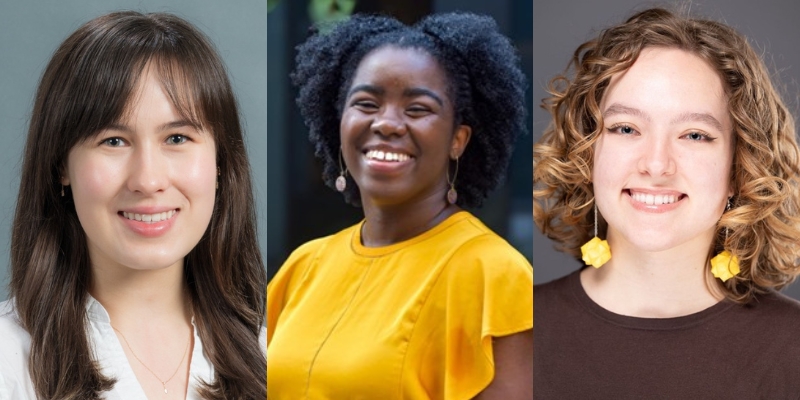
Hear from UW students about research on tadpole tail regeneration, the science of early immunity, and how corals remember.
How Tadpoles Grow Back Their Tails: The Science of Regeneration
Beatrice Milnes
Some animals, like tadpoles, have an almost superpower-like ability to regrow lost body parts. When a tadpole loses its tail, the injured area undergoes dramatic changes to create new healthy tissue through a process called regeneration. Immune cells are one of the cell types that change the most after injury and play an important role in how well the body is able to heal. If they are blocked from doing their job in tadpoles, regeneration does not occur. By understanding how regeneration works in tadpoles, scientists hope to one day apply these lessons to improve human medicine.
Beatrice Milnes is a fourth-year PhD candidate in the Molecular and Cellular Biology program at the University of Washington School of Medicine. Her work studies tadpole tail regeneration, specifically how metabolism influences immune responses after injury, in the hopes of improving regenerative medicine strategies. Beatrice conducts her research in Dr. Andrea Wills’ lab in the Department of Biochemistry and the Institute for Stem Cell & Regenerative Medicine. Outside of lab, Beatrice enjoys ceramics and exploring ancient history.
Small Beginnings, Strong Defenses: The Science of Early Immunity
Sophia Chima
Join Sophia Chioma Chima, a 3rd-year PhD candidate at the University of Washington, to learn how scientists study pregnancy to help keep babies healthy before they’re even born. She will explain how the fetal immune system develops and how infections or early exposures can affect a baby’s long-term health. Sophia will also share practical insights on pregnancy health and highlight resources to help families and healthcare providers. You’ll get a peek at how discoveries in the lab can translate into real-world strategies to improve maternal and infant well-being. This talk is perfect for anyone curious about how research can make a difference in pregnancy and early-life health.
I’m Sophia Chioma Chima, a PhD candidate in the Pathobiology program at the School of Public Health, University of Washington. I am also a Predoctoral Research Associate in the Obstetrics and Gynecology Research department. I study how the fetal immune system develops and responds to infections during pregnancy, with the goal of improving maternal and infant health. I’m passionate about translating scientific discoveries into practical strategies and insights for families, healthcare providers, and the broader scientific community.
How Corals Remember
Kathleen Durkin
How corals make the most of their DNA to remember and respond to stressful events.
Kathleen Durkin is a PhD student in Aquatic and Fishery Sciences who is broadly interested in how important marine organisms respond to environmental stress under climate change. As an undergraduate at Harvey Mudd College, she studied soft coral taxonomy and population genetics, graduating in 2023 with a B.S. in Mathematical and Computational Biology. Her current research involves studying stress response through the lens of epigenetics — molecular features that can affect the body without altering the underlying DNA.