
The decade ahead will be filled with change for the health care industry. Here is a look at what experts see as the biggest innovations and alterations in the Puget Sound region.
Gene editing
Gene editing using CRISPR has already made it into human trials, but researchers at Fred Hutchinson Cancer Research Center are using the technology to create tailored antibodies by manipulating B cells. They won’t replace vaccines, but this therapy could be used for complex diseases, said Justin Taylor, assistant member at the Hutch who works on B cells.
“I think the 2020s will prove to be the decade of cell and gene therapy,” said Keith Jerome, a Fred Hutch virologist. “Not only for HIV, but for other infectious diseases, cancer and much more.”
Technology
Artificial intelligence and other technology will play a larger role in advancing therapies, many predict.
“As research organizations like Fred Hutch and others generate more and more data, we will finally be able to leverage new machine learning approaches to gather specific insights,” said Raphael Gottardo, scientific director of the Translational Data Science Integrated Research Center at the Hutch. “Computational biology will be the key to helping discover and validate new therapeutics or repurposing old drugs to treat new diseases.”
Partnerships with companies like Microsoft and Adaptive Biotechnologies will continue to emerge over the next decade, Gottardo said. These relationships will “solve some of society’s most difficult problems.”
Tech will also aid in the sharing of data.
“Far too often, data remains siloed and inaccessible, limiting its potential for good,” Gottardo said. “Enabling collaborations, data sharing, and data-driven research will help the field advance its research capabilities and lead to health and science breakthroughs.”



But increased data sharing will bring about a larger debate about patient privacy, said Mike McSherry, CEO of Xealth, a digital platform that integrates medical records electronically.
“It’s hard to dispute the benefits of large scale data and predictive algorithms and discerning correlations against large data sets,” he said. “But in health care it’s been so siloed that we’ve not seen that occur yet. And I think there’s an inevitability to it that probably also hits a global public policy level debate.”
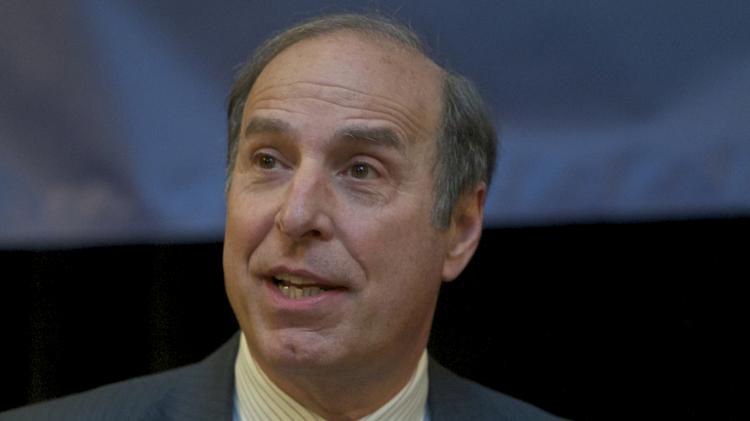
Providence Health Services President & CEO Dr. Rod Hochman during a Puget Sound Business Journal Live event at the Hyatt Olive 8 in Seattle on Wednesday.
Providence CEO Rod Hochman foresees the full digitalization of health care systems and doctors spending less time at a keyboard imputing data and more time with patients.
“When you put health care people with tech people, we always say that’s where the magic happens,” he said.
Hochman knows first-hand the power of bringing these two fields together, as he’s created an innovations department run by former Amazon and Microsoft employees. In 2017, this innovations team spun out Xealth, a digital platform that integrates with hospitals’ electric records systems to facilitate information resources between doctors and patients.
On-demand care, like 98point6 is doing for primary care or ZoomCare is doing for urgent care, will continue to reshape the industry. Hospitals will become a place for specialized care and where people are being assessed by their genetics and biological age, Hochman said.
“Hospitals alone can’t solve the problems of health care,” Hochman said.
Betting on Bothell
Bothell City Manager Jennifer Phillips is planning on Bothell’s life science sector growing in the next decade. One aspect of that is the city’s plan to turn the 735-acre Canyon Park — already home to Seattle Genetics, Juno Therapeutics and Philips — into a bigger biotech hub.
There are more than 10,000 health care related jobs in Bothell, which represents 30 percent of the city’s employment.
“It’s planning for opportunity,” she said. “What we’re telling the businesses is we want you here and we want you to be successful here.”
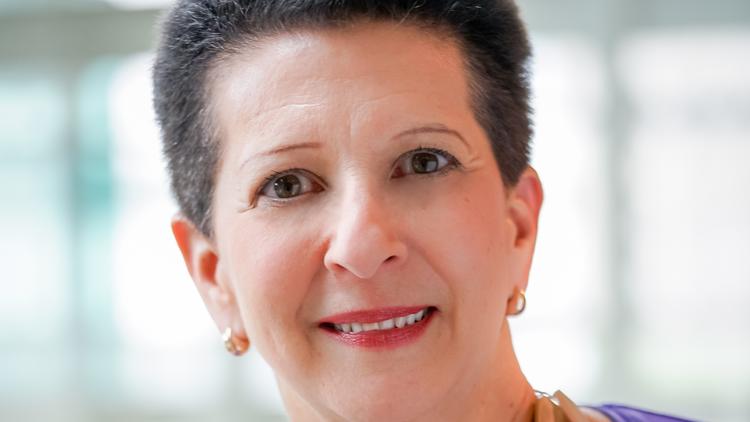
Leslie Alexandre is the president and CEO of Life Science Washington.
The state of Seattle biotech
The state had 1,144 life science companies this year, up from 888 four years ago, Life Science Washington estimates.
Leslie Alexandre, the organization’s president and CEO, expects that number to continue growing over the next decade.
“We’re the fastest growing (life science) ecosystem in the country,” she said. “I see nothing but growth.”
The state of biotech in the Puget Sound region has matured in the last 10 years, but “in another decade it’s really going to solidify the incredible growth we’ve seen,” Alexandre said.
She said companies like Adaptive Biotechnologies are leading the charge in Seattle and as many as 5,000 life science businesses will be in Washington by 2030.
If lab space is an indicator of the industry’s growth potential, Alexandria Real Estate Equities founder and Executive Chairman Joel Marcus is bullish on Seattle. His company owns 1.6 million square feet of lab and office space designed solely for life science companies like Adaptive Biotechnologies, which is set to move into a new 100,000-square-foot headquarters by 2021.
Marcus called Seattle’s biotech industry a “vibrant cluster” and his company has been working since 1996 to develop the South Lake Union neighborhood.
“Seattle is already successful,” Marcus said. “The life science cluster … needs probably another decade of continual growth to emerge as one of the dominant clusters in the country.”