
Seattle Genetics, Inc. today announced positive results from exploratory analyses of intracranial efficacy, including survival, in patients with HER2-positive metastatic breast cancer (MBC) who had stable or active brain metastases in the HER2CLIMB pivotal trial of TUKYSA™ (tucatinib). HER2CLIMB compared TUKYSA in combination with trastuzumab and capecitabine to trastuzumab and capecitabine alone in patients with unresectable, locally advanced or metastatic HER2-positive breast cancer with or without brain metastases. Of the patients enrolled in the trial, 48 percent had a presence or history of brain metastases. Results demonstrated that the addition of TUKYSA to trastuzumab and capecitabine in patients with brain metastases delayed progression in the brain, doubled the intracranial response rate (tumor shrinkage in the brain) and reduced the overall risk of death by nearly half. The data were consistent across patients who had either stable or active brain metastases. Results were presented in an oral presentation in the virtual scientific program of the 2020 American Society of Clinical Oncology (ASCO) Annual Meeting and simultaneously published in the Journal of Clinical Oncology.
This press release features multimedia. View the full release here: https://www.businesswire.com/news/home/20200529005149/en/
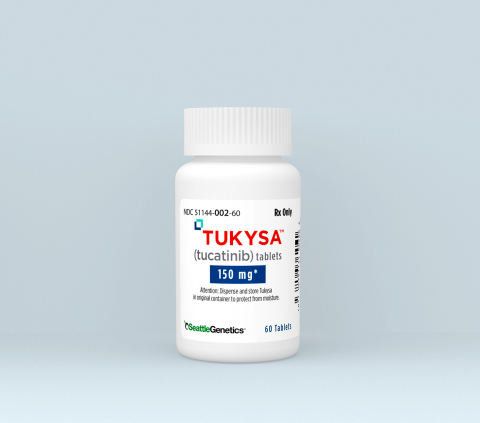 (Photo: Business Wire)
TUKYSA in combination with trastuzumab and capecitabine was approved by the U.S. Food and Drug Administration (FDA) in April 2020 for adult patients with advanced unresectable or metastatic HER2-positive breast cancer, including patients with brain metastases, who have received one or more prior anti-HER2-based regimens in the metastatic setting. Primary results from HER2CLIMB were first presented at the San Antonio Breast Cancer Symposium in December 2019 and published in the New England Journal of Medicine.
“It is immensely gratifying to see for the first time, results for patients with stable or active brain metastases who are not typically included in clinical trials, especially when you consider that nearly half of patients with HER2-positive metastatic breast cancer experience disease progression to the brain,” said Nancy U. Lin, M.D., director of the Metastatic Breast Cancer Program in the Susan F. Smith Center for Women’s Cancers at Dana-Farber in Boston, MA. “These additional analyses provide further evidence that TUKYSA improves survival and delays cancer progression in the brain for patients with HER2-positive metastatic breast cancer who have brain metastases.”
“These additional analyses, together with the primary analysis of HER2CLIMB, show TUKYSA is active for patients with and without disease that has spread to the brain,” said Roger Dansey, M.D., Chief Medical Officer of Seattle Genetics. “We continue to be encouraged by the remarkable clinical activity of TUKYSA in combination with trastuzumab and capecitabine and look forward to evaluating its potential in additional treatment settings and tumor types through our ongoing clinical program.”
The new data that further examine TUKYSA’s effect in the brain include exploratory analyses for central nervous system progression-free survival (CNS-PFS), overall survival (OS), intracranial objective response rate (ORR-IC) and duration of response in HER2-positive metastatic breast cancer patients whose disease had spread to the brain.
The exploratory analyses demonstrated that patients with brain metastases who received the TUKYSA combination versus trastuzumab and capecitabine alone had:
- a 42 percent reduction in the risk of death
- a 68 percent reduction in the risk of CNS disease progression (a delay in progression in the brain) or death
- a more than doubling of intracranial response rate (47 percent vs. 20 percent) for patients who had active measurable intracranial lesions at baseline